

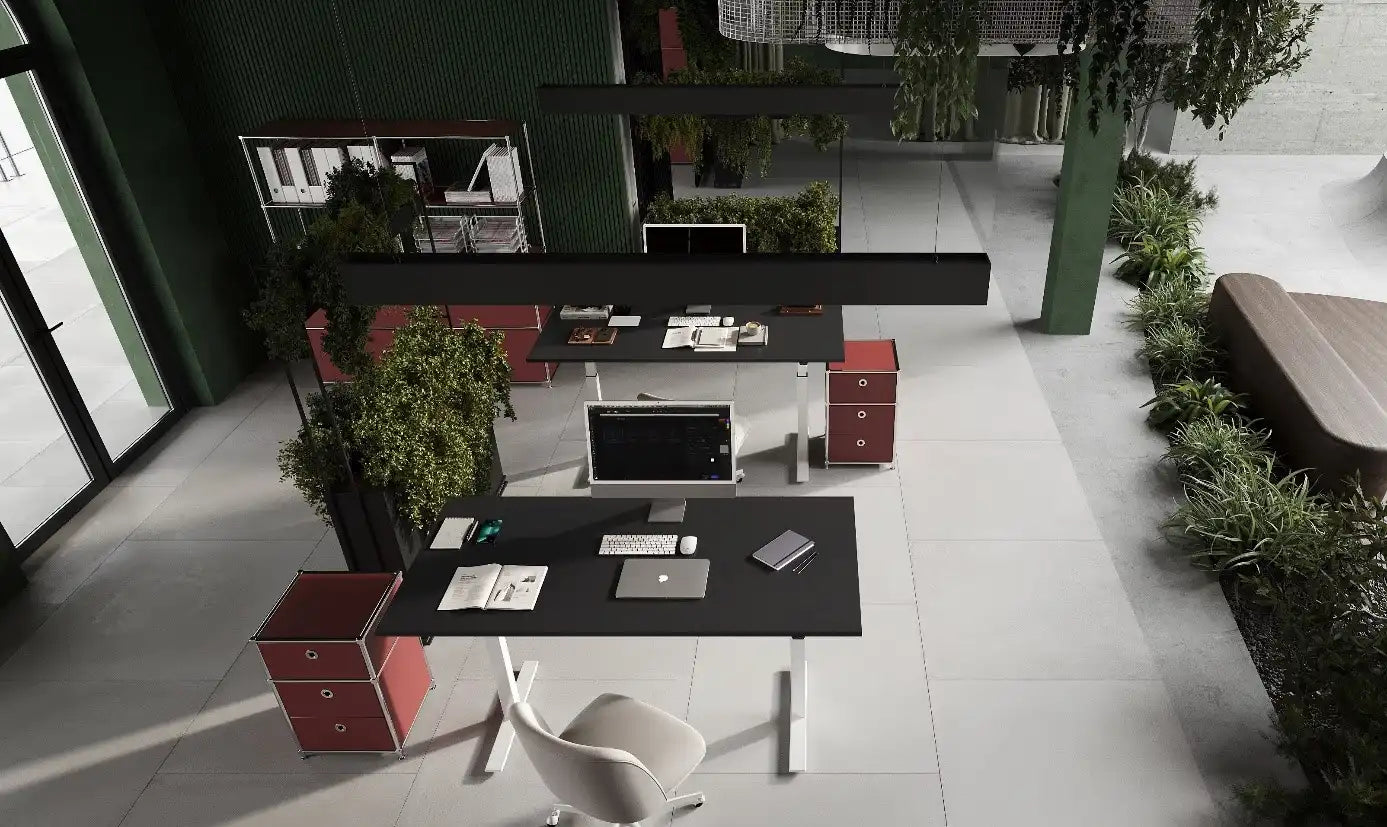
The job market is undergoing a massive transformation as the baby boomers' working lives come to an end. Younger generations dominate the workforce and have different expectations regarding the work environment and job content. Baby boomers were accustomed to traditional office structures, clear hierarchies, and fixed workstations, while millennials and Gen Z have grown up with new technologies and a more flexible work culture, often preferring an open, collaborative, and flexible work environment. Modern office concepts are therefore in high demand!

Mastering the challenges of demographic change

Who wouldn't strive to work more agilely, efficiently, and innovatively with a highly motivated team, while simultaneously finding personal meaning and purpose in their work? But how can this be achieved?
For young companies with a very homogeneous age structure, this task is potentially easier. Companies employing different generations, on the other hand, must reconcile the diverse needs and expectations to create a positive work environment for everyone. Flexibility and the ability to combine different office concepts help to meet the needs of the various generations and create a harmonious working environment.
The most important differences summarized briefly:
Work environment and culture: Baby Boomers and Generation X grew up with traditional office structures and often value a clear hierarchy and assigned workspaces. Millennials and Gen Z, on the other hand, grew up with new technologies and are already familiar with a more flexible work culture. They often prefer an open, collaborative, and flexible work environment.
Technology and digital tools: Gen Z is the first generation to have grown up in a high-tech world. They are adept at using digital tools and expect a modern, well-equipped work environment with the latest technologies.
Working hours and flexibility : Gen Z often appreciates more flexible working hours and the option to work remotely. They value work-life balance and want to harmonize their work with other activities.
Collaboration and social interaction: Gen Z is very socially connected and values collaboration and interaction with colleagues. Open-plan office concepts and shared workspaces can suit them well.
Career prospects and company values: Gen Z often shows a strong interest in company culture, social responsibility, and the opportunity to do meaningful work. They tend to choose companies that align with their values.
What is meant by the term "office concept"?
definition
The term “office concept” refers to the structural and organizational approaches used in the design and furnishing of offices. The work environment should be optimized to meet the needs and requirements of the employees, the company, and the work itself.
What aspects does an office concept encompass?

An office concept encompasses various aspects that can be of varying importance depending on the company and its corporate culture. Key elements include:
- Office and workplace design : that is, the physical arrangement of desks, meeting rooms, rest areas, etc., to ensure efficient use of available space and an optimal working environment.
- Flexibility : Because the possibilities, needs, and requirements are subject to rapid change due to developments in technology, work culture, and society, office concepts should be adaptable as easily as possible. Flexibility is therefore a key aspect of modern office concepts. This can be achieved, for example, through modular furniture, adaptable workspaces, and mobile technologies.
- Technology integration: Office concepts often include the integration of new technologies to optimize employee communication, collaboration, and productivity.
- Ergonomics: The consideration of ergonomic design in working environments: furniture, work equipment and lighting, to promote the health and well-being of employees.
- Employee participation: Good office concepts emerge when the opinions and needs of employees are consciously gathered and taken into account. A positively perceived work environment fosters employee satisfaction and can increase productivity.
- Sustainability: A growing trend in modern offices is the integration of sustainable practices, such as the paperless office, the use of environmentally friendly materials, energy efficiency measures and recycling initiatives.
What modern office concepts are there?

Open Space (Open Office) :
Open-plan office spaces without assigned workstations, designed to promote collaboration and communication between employees.
Advantages:
- It promotes collaboration and communication, as employees can easily approach each other.
- Flexibility in the design of workplaces and the use of office space.
- Cost savings, as fewer rooms and less furniture are needed.
Disadvantages:
- Noise and distractions can impair concentration and productivity.
- Lack of privacy and constant surveillance can lead to stress.
- A lack of designated workspaces can lead to disorder and conflict.
Coworking spaces
Shared workspaces used by various companies and self-employed individuals to share costs and take advantage of networking opportunities.
Advantages:
- Networking opportunities through collaboration with various companies and self-employed individuals.
- Cost savings through shared resources and infrastructure.
- Flexibility, as most coworking spaces offer flexible membership options.
Disadvantages:
- Potential confidentiality and data protection issues arising from collaboration with other companies.
- Noise and distractions, similar to open-plan offices.
- Less control over the work environment, as the space is shared.
Activity-Based Working (ABW) :

This involves creating different work areas that correspond to the different tasks of the employees, such as quiet zones, creative spaces or areas for concentration.
Advantages:
- Offers a variety of workspaces tailored to the different tasks and working styles of employees.
- It can increase employee satisfaction and productivity by allowing employees to choose the space that best suits their current task.
- Can optimize the use of office space and reduce vacancy.
Disadvantages:
- This can pose a challenge in terms of space and resource management.
- Employees may have difficulty adapting if they do not have a permanent workplace.
- It requires thorough planning and ongoing review to ensure that the spaces meet the needs of the employees.
Agile working environment

Inspired by agile methods in project management, flexible workspaces are created to promote collaboration, innovation and adaptability among employees.
Advantages:
- It promotes collaboration, innovation, and rapid adaptation to change.
- Allows teams to adapt their work environment as needed.
- Supports agile methods such as Scrum or Kanban.
Disadvantages:
- Not every type of work or team is well suited to an agile working environment.
- This can lead to a lack of structure and clarity if it is not managed properly.
- It requires a culture of openness and trust, which is not present in every company.
Home Office Remote Work (Teleworking)

The option to work from home or any other location outside the office.
Advantages:
- It offers employees flexibility and can improve work-life balance.
- It reduces commuting times and can save on office space costs.
- It allows companies to hire talent regardless of geographical restrictions.
Disadvantages:
- Communication and collaboration can be more difficult.
- Employees may feel isolated and the company culture may suffer.
- Requires good self-organization and a suitable home office environment.
Green Office (Sustainable Offices)

Office concepts with a focus on sustainability, ecological materials, energy efficiency and environmentally friendly practices.
Advantages:
- It reduces the company's ecological footprint and can contribute to achieving sustainability goals.
- It can improve employee well-being, e.g. through improved air quality or natural lighting.
- It can promote a positive corporate image and attract customers or employees who value sustainability.
Disadvantages:
- May require higher initial investments, e.g. for ecological building materials or energy efficiency technologies.
- Not all environmentally friendly measures are feasible in every office building.
- Achieving sustainability goals can be difficult to measure and verify.
Hybrid work models for your office

A combination of office work and teleworking to offer flexibility and meet the individual needs of employees.
Advantages:
- It offers a balance between the flexibility of teleworking and the advantages of working together in the office.
- It can improve employee satisfaction and productivity by allowing employees to choose where they want to work, depending on their task, preference, or personal circumstances.
- Can save on office space costs if fewer permanent workstations are needed.
Disadvantages:
- It can complicate the management of communication, collaboration, and resources.
- The risk of a “two-tier society” arises if not all roles and employees are equally well suited for teleworking.
- It requires clear guidelines and technologies to effectively support both office work and remote work.
Conclusion on modern concepts for the office
Choosing the right office concept depends on various factors. The nature of the work, the needs of the employees, and the company culture are essential. Many companies combine different concepts to create a customized solution that best meets their specific requirements. It is important that the chosen concept considers the needs of the employees, fosters a positive and productive work environment, and optimally supports the company's goals.
The traditional office concept
The traditional office is not "modern," but it is still widespread. This is the classic model where all employees have their own assigned workspaces. It often consists of individual offices for managers and open-plan workspaces for other employees.
In recent years, a clear trend towards more modern office concepts such as open-plan offices, coworking spaces, and hybrid work models has emerged. Nevertheless, many long-established companies still cling to their traditional office structures. Decisive factors often include:
- Familiarity and habit: Companies steeped in tradition and long-term employees often prefer the familiarity of known structures.
- Data protection and concentration : Certain professions or activities require a high degree of privacy and concentration, which can be better guaranteed in a private office.
- Investment and infrastructure : Changing office infrastructure can be costly, and some companies may stick with their traditional office concept for financial reasons.
How modern is my office concept?
Different companies require different concepts for a modern office. Older employees often appreciate familiar, traditional office structures and assigned workstations. Younger colleagues, on the other hand, tend to prefer an open, collaborative, and flexible work environment. Companies should therefore consider their individual requirements and the specific needs of their employees to choose the most suitable office concept. Combining different concepts can be helpful. Here are some of the main reasons why companies use different office concepts:
Flexibility: The world of work has become more dynamic and diverse. Companies are well advised to be able to meet the requirements of different work styles and needs. Various office concepts offer flexibility and enable employees to perform their work efficiently according to the task at hand and their personal preferences.
Productivity and collaboration: Some office concepts, such as open-plan or activity-based working, particularly promote collaboration and information exchange among employees. Open work environments can facilitate communication and thus improve collaboration between teams and departments.
Creativity and innovation: Modern office concepts often place particular emphasis on fostering creativity and innovation. They offer inspiring spaces and environments designed to stimulate the creative thinking of employees.
Cost optimization: Certain office concepts, such as coworking spaces, can help companies reduce costs because they can share resources and infrastructure with other companies.
Employee retention and well-being: A well-designed office concept can help retain and motivate employees. A pleasant working environment often increases employee well-being and satisfaction.
Technological progress: New technologies and increasing digitalization make it possible to implement advanced office concepts that allow for a high degree of flexibility regarding the workplace and working methods.
Environmental aspects: Sustainable office concepts are in line with the growing awareness of environmental friendliness and help to reduce a company's ecological footprint.
What are open-plan offices?
Open-plan offices are a type of office concept where employees work in a large, open space instead of individual, enclosed offices. Often, different work zones are set up where teams can meet for specific projects or tasks. This concept aligns with the trend towards non-territorial workplaces and desk sharing, where workstations are no longer permanently assigned to a single employee but can be used by anyone who needs them.
Advantages of open-plan offices
Open-plan offices offer numerous advantages for both the company and its employees. They promote communication and collaboration by removing physical barriers and facilitating the exchange of ideas. Furthermore, sharing office space can lead to cost savings.
Another advantage is flexibility: the open design allows rooms and workstations to be quickly and easily adapted to changing requirements. Furthermore, employees can choose the most suitable workspace for their task and are not tied to a fixed location.
Challenges of open-plan offices
Despite their many advantages, open-plan offices are not equally suitable for all companies and employees. Challenges can arise, particularly regarding concentration and privacy. Noise and interruptions can impair work efficiency, and finding a quiet place for focused work or confidential conversations can be difficult.
Furthermore, an open-plan office requires good office planning and furnishing to be effective. Otherwise, it can become a disorganized, chaotic space where no one feels truly comfortable.
Questions & Answers about modern office concepts
History and background of new office concepts
Most changes and innovations in office concepts occurred in the last decade of the 20th century and the early 21st century. In the 1990s, companies began to question traditional office structures and explore new approaches to designing work environments.
Introduction of Open Space: In the 1990s, the concept of the open-plan office became popular. The idea that open working environments facilitate communication and collaboration between employees gained traction.
The rise of the New Economy: With the rise of technology companies and the New Economy, the world of work changed dramatically. Startups and IT companies introduced new working models that emphasized flexibility and creativity.
Coworking concepts: In the late 2000s and early 2010s, coworking spaces became increasingly popular. These shared offices offered independent professionals and small teams flexible work options and the opportunity to exchange ideas in an inspiring environment.
Technological progress: Advances in technology enabled companies to introduce innovative office concepts based on networked devices, collaborative tools, and intelligent workplace solutions.
Focus on employee well-being: In recent years, employee well-being in the workplace has become increasingly important. Office concepts have been geared towards creating healthier and more ergonomic working environments.
Activity-Based Working (ABW): The ABW concept, in which different work areas are provided for different tasks, has become increasingly popular.
Home office and remote work: The increasing prevalence of technology and internet connections enabled companies to offer remote work options. During the Covid pandemic, mandatory home office arrangements were even introduced – at times.
In conclusion, many changes have taken place in recent decades. Office concepts will continue to evolve in the future. The generational shift among employees will give greater weight to the expectations of the younger generation.
Frequently Asked Questions
What will the office concept of the future look like?
In the office concept of the future, technology and design merge in a revolutionary way to create flexible, healthy, and productive work environments. Traditional office structures based on individual desks and static workstations are increasingly being replaced by dynamic layouts that foster teamwork, creativity, and employee well-being. Technological innovations such as virtual reality, AI-powered tools, and advanced collaboration software enable seamless communication and collaboration, whether employees are working in the office or remotely. Furthermore, the office concept of the future places a strong emphasis on sustainability and inclusion. Green technologies, recycling programs, and energy-efficient design help companies reduce their environmental footprint, while accessible workplaces ensure that people of all abilities have access and can participate. The office of the future is thus an adaptive space that constantly evolves to meet the changing needs of employees and the planet.
What does flexible office design mean?
Flexible office design refers to workplace layouts that can adapt to the varying needs and requirements of employees. Instead of rigid structures with fixed desks, flexible design enables a dynamic work environment that facilitates switching between different work modes such as collaboration, concentration, communication, or relaxation. Elements of flexible office design can include, for example, movable partitions, multifunctional furniture, and versatile workspaces suitable for both individual work and group projects.
Here's how to implement flexible office design in your office:
To implement a flexible office design in your office, thorough planning is essential. Examine your employees' work patterns and needs. What types of activities do they perform? How much space do they require for these activities? What kind of environment fosters their productivity and well-being? Use this information to create a design that meets your employees' needs while also allowing for future changes and adjustments.
How do you create a good workplace and room concept?
When creating a good workplace and spatial concept, the needs of employees are paramount. Think beyond traditional office layouts and consider aspects such as ergonomic design, natural lighting, and acoustics. Furthermore, it can be helpful to create different areas for different types of work—for example, quiet areas for focused work and open areas for collaboration. A well-thought-out spatial concept can significantly increase employee satisfaction and productivity and contribute to fostering a positive company culture.
Link to our blog: Guide to office planning & setting up an office like a pro
Demographic change in the Swiss labor market
editor
Federal Statistical Office, Switzerland
Share :
Reception counters – Modern, stylish and individual
Media and TV furniture